AI service quotation extraction reads a workshop's PDF or scanned quote, pulls out the vehicle ID, parts, labor, and totals, and syncs the result into your fleet system through an API. For a fleet coordinator juggling quotes from a dozen different shops, it turns a 30-minute task into roughly two.
That gap matters more in fleet operations than almost anywhere else in back-office work, because a single vehicle down for repair often means comparing three or four competing quotes before approving one, and every minute spent re-typing line items is a minute the vehicle sits idle.
What manual quotation handling costs a fleet team
Every quote a workshop sends passes through the same slow sequence: someone opens the PDF, reads it, keys the parts and labor lines into a spreadsheet or fleet system, logs which vehicle it's for, compares it against quotes from other shops, and files the approved one. None of those steps is hard. All of them together add up.
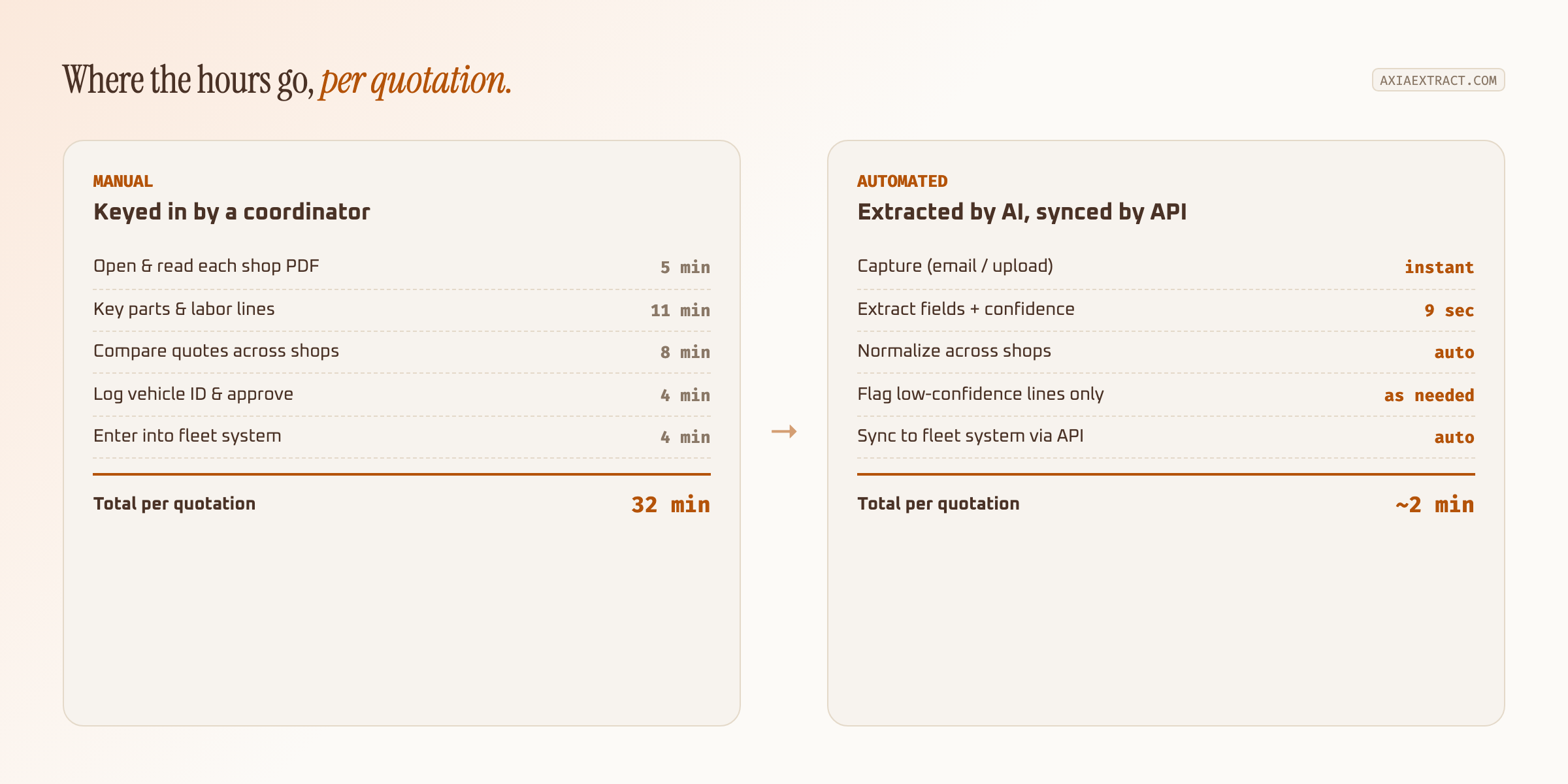
A fleet running fifty vehicles through service every month, across a handful of preferred shops plus the occasional new one, easily spends over 25 hours on quotation handling alone. That's before counting the cost of a coordinator missing a cheaper quote because comparing three PDFs side by side is tedious enough that nobody does it carefully every time.
Why fleet quotations need a different approach than standard AP
Regular accounts payable automation assumes a relatively stable set of vendors sending relatively similar invoices every month. Fleet management doesn't work that way. A vehicle breaks down two states away and gets towed to whatever shop is closest, a workshop that's never sent your fleet a quote before and never will again after this one repair.
That means the extraction schema has to hold up on formats it has never seen, not just the handful of preferred vendors a typical AP automation setup is tuned for. It also means the fields themselves differ: a fleet quotation needs a vehicle ID or plate number tied to the record, not just a vendor name and a total, so the extracted data can actually attach to the right asset in your fleet management system rather than landing as an orphaned line item.
Work order or PO references matter more here too. A fleet running preventive maintenance schedules alongside unplanned repairs needs to know which quotation ties back to which scheduled service versus which breakdown, and that distinction has to survive the extraction step intact.
How AI service quotation extraction actually works
The setup starts with a schema: the fields you actually need out of every quote (vehicle ID or plate number, shop name, parts list, labor cost, total, and often a PO or work order reference). That schema applies uniformly whether the document is a clean typed PDF from your regular shop or a photo of a handwritten estimate from a workshop you've never used before.
Capture channels matter as much as the extraction itself. Workshops don't standardize how they send quotes: some email a PDF attachment, some text a photo, some forward it through a dispatcher. A dedicated intake email address or upload folder means quotes land in the pipeline automatically instead of a person forwarding each one manually before processing can even start.
Every extracted field returns with a confidence score. High-confidence fields, which is most of them once a shop's format is familiar, flow straight through. Anything below your threshold, a smudged total or an ambiguous vehicle ID, gets flagged for a person to glance at rather than forcing a full manual review of every quote that comes in.
The schema itself typically differs by repair type without needing a separate tool for each. Routine maintenance quotes (oil changes, tire rotations, brake jobs) tend to be short and predictable. Collision estimates run longer, with dozens of line items covering parts, paint, and labor separately. Both extract against the same underlying engine, just with a schema sized to what that document type actually contains.
Comparing quotes across shops automatically
This is where AI service quotation extraction earns more than time savings. Once every shop's quote runs through the same schema, the parts, labor, and totals line up in a consistent structure regardless of how differently each workshop formats its paperwork.
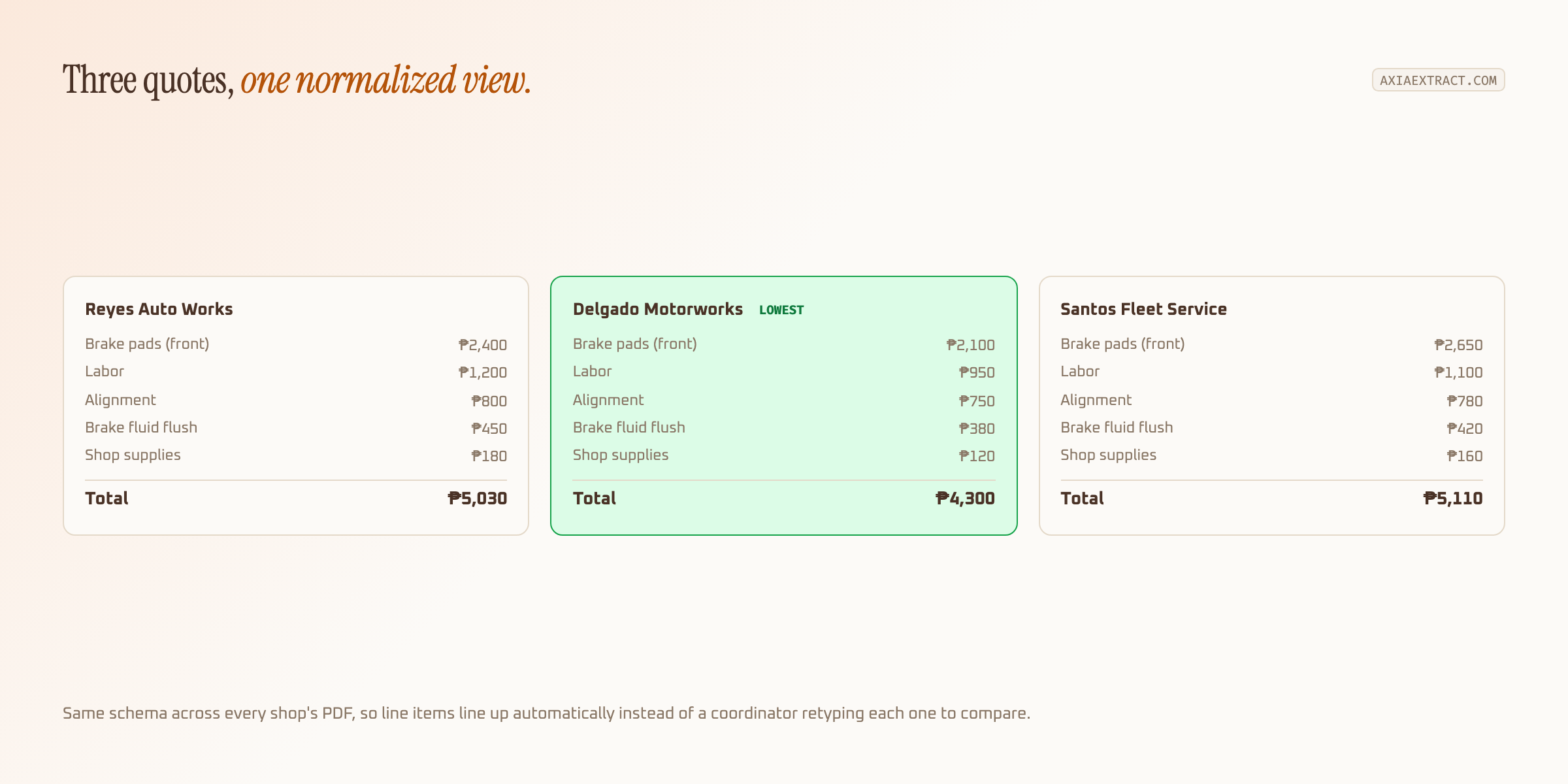
A coordinator no longer has to open three PDFs and manually add up line items to figure out which shop actually quoted the lowest total once parts and labor are broken out consistently. The comparison becomes a lookup instead of a spreadsheet exercise, which is often the difference between quickly approving the cheaper option and defaulting to whichever quote arrived first.
Fleets that automate service quotation extraction across their full shop network usually find the comparison itself, not just the time saved on data entry, is where the real savings sit. A five to ten percent gap between competing quotes on the same repair is common, and that gap compounds fast across a fleet processing dozens of vehicles through service every month.
Syncing extracted quotations into your fleet system via API
Extraction only pays off if the structured data lands somewhere your team already works. Most platforms return JSON and expose a REST API, with a webhook that fires the moment a quotation finishes processing.
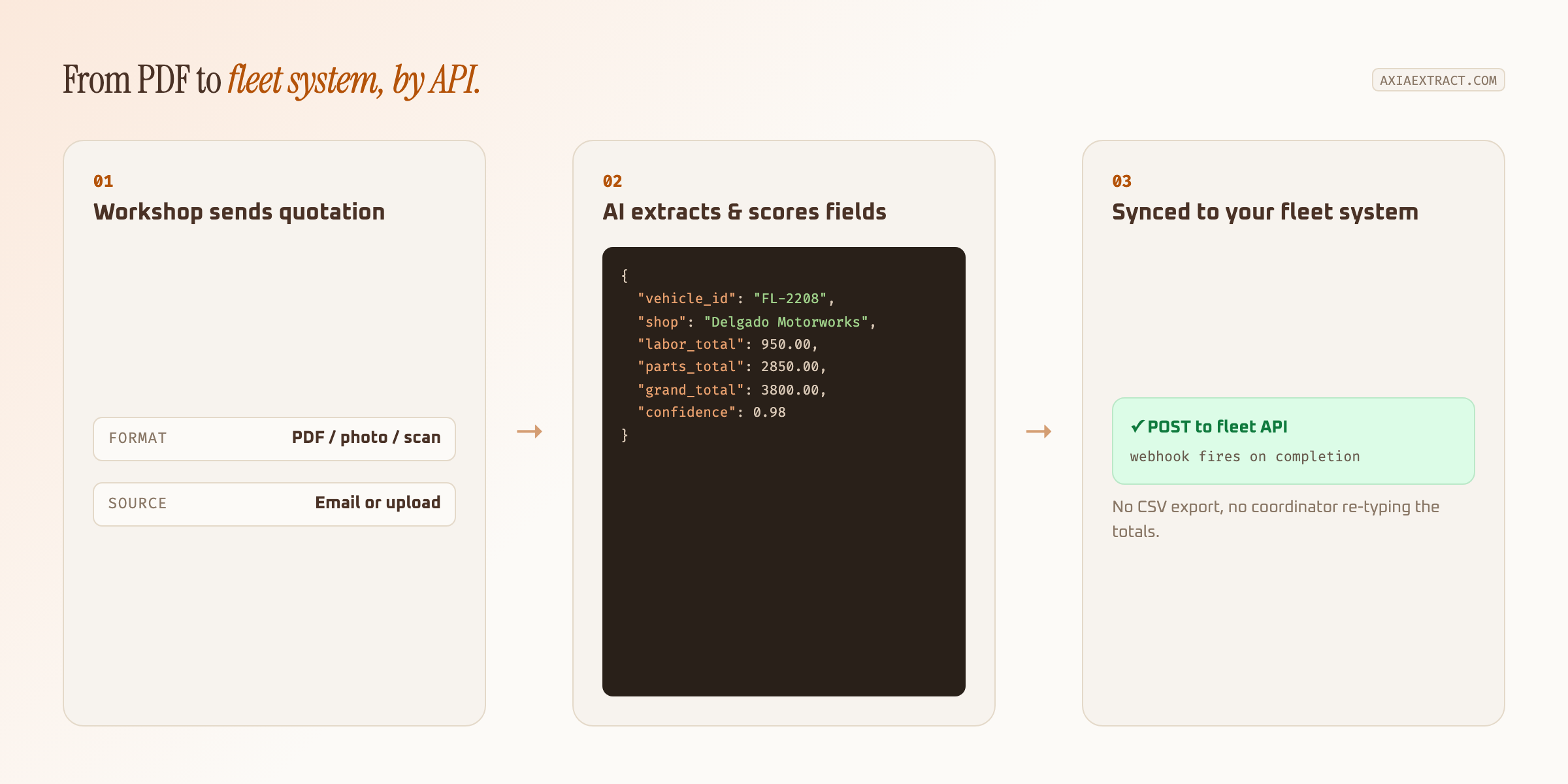
That API connection is what separates a tool that saves time from one that becomes actual infrastructure. Instead of a coordinator exporting a CSV and importing it into the fleet system by hand, or worse, re-typing the same numbers twice, the extracted fields post directly into the vehicle's maintenance record as soon as the webhook fires.
| What to check | Why it matters for fleet operations |
|---|---|
| No per-shop templates | A new workshop shouldn't require a setup project before you can use their quote |
| REST API + webhooks | Quotations should sync automatically, not wait for someone to export a file |
| Per-field confidence scores | Lets review effort focus on the one ambiguous line instead of the whole document |
| Handwriting support | Independent shops still hand-write estimates more often than fleets expect |
| Published accuracy by field type | A single blended percentage hides where totals or vehicle IDs specifically struggle |
Common concerns before automating fleet quotation handling
"What happens when a one-off shop's quote doesn't extract cleanly" is the question that comes up first, and it's a reasonable one given how much of fleet repair volume runs through unfamiliar workshops rather than a fixed vendor list. Confidence scoring is the direct answer: a quote from an unfamiliar shop that extracts at lower confidence gets flagged automatically, so the coordinator spends thirty seconds checking that one document instead of skipping automation for every shop that isn't already known to the system.
Data ownership is the second concern, particularly for fleets managing vehicles under insurance or lease agreements where documentation needs to be retrievable years later. Confirm any extraction vendor lets you export the full structured history, not just view it inside their dashboard, and ask directly about retention policy on the original scanned documents.
The third worry is integration effort: does adding this mean weeks of engineering time to connect to the fleet system already in place. A REST API with webhook delivery is usually a days-not-weeks integration for a team with any existing API experience, and most fleet management platforms already support inbound webhooks or a CSV fallback for systems that don't.
Rolling it out without disrupting operations
Start with your highest-volume shop relationship rather than trying to automate every workshop at once. Once extracted totals for that shop's quotes consistently match what a coordinator would have keyed by hand, widen the schema to your other regular shops, then to the one-off workshops that only show up occasionally.
Set the confidence threshold conservatively at first. If flagged quotations are piling up in review, the threshold is probably tighter than your document quality needs, and it's worth loosening it once a few weeks of results confirm the extraction is holding up on your specific mix of shops.
Run a batch of your messiest real quotations first, including any handwritten estimate from a workshop with bad handwriting or a photo taken at an angle in a parking lot. If those extract cleanly, the polished PDFs from your regular shops will too.
For the fields and API details behind this specifically, our guide to AI document extraction covers schema design and export options across all nine document types Axia Extract handles, fleet quotations included. If you want the accuracy numbers before testing anything, the full accuracy benchmarks break results down by field type rather than a single headline percentage.
Automating service quotation extraction doesn't remove a coordinator from the approval decision. It removes the thirty minutes of retyping that used to happen before that decision could even get made.